Leave Your Message
Choosing the right Wire Pulling Heads can determine whether a cable installation feels controlled or becomes a costly struggle. The best head is not always the most expensive one. It must match the cable diameter, conductor weight, insulation type, pulling tension, and jobsite conditions. A tight conduit bend, a damp trench, or a rough inner wall can expose a weak connection quickly.
Electrical installation educator Mike Holt has repeatedly emphasized a practical principle: “Plan the work, then work the plan.” That advice applies directly to cable pulling. Before selecting equipment, installers should check the cable manufacturer’s pulling limits and the conduit layout. A swivel eye may reduce twisting. A basket grip may improve cable security. A pulling head with a smooth nose may protect insulation at bends. Small details matter.
This guide examines seven Wire Pulling Heads used for professional cable installation. Each option is considered through practical criteria, including strength, grip reliability, compatibility, handling, and value. Field experience also matters. A tool that performs well in a straight conduit may disappoint around several bends. No single design wins every job.
That is the uncomfortable part.
The final choice still depends on the cable, route, crew, and pulling method. Readers should treat product rankings as a starting point, not a substitute for engineering judgment. Even experienced installers can overlook tension buildup. Careful inspection remains essential before, during, and after every pull.
7 Best Wire Pulling Heads for Cable Installation
What Are Wire Pulling Heads and How Do They Work?
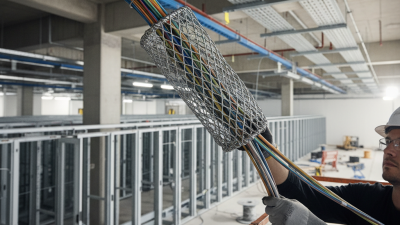
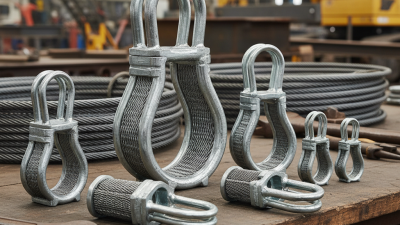
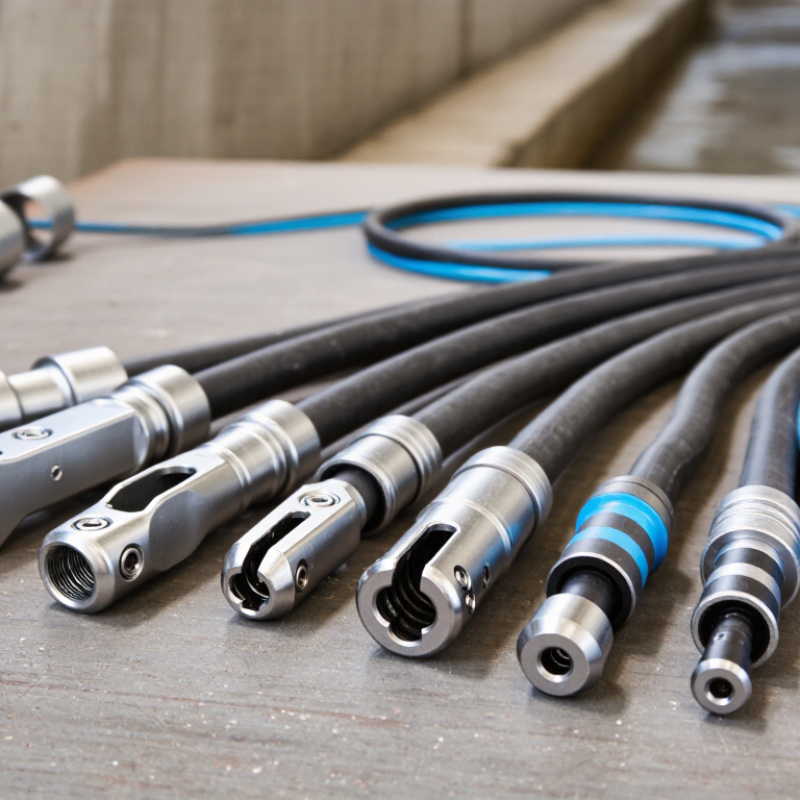
Wire pulling heads are fittings attached to cable ends before installation. They create a stronger, smoother connection between the cable and pulling rope. Common choices include swivel-eye heads, pulling eyes, mesh grips, basket grips, bullet-nose heads, flexible ball heads, and threaded heads. Each design suits a different cable size, route, and pulling force.
A swivel head allows the cable to rotate during a pull. This reduces twisting inside conduit. A mesh grip spreads pressure across the cable jacket, rather than concentrating force at one point. Bullet-nose heads guide cables past bends and joints. Threaded heads provide a secure connection for prepared cable ends. Flexible ball heads work well in conduits with tight curves, although they may not suit every cable diameter.
From field experience, the best head is rarely the most expensive one. It matches the cable, conduit, pulling distance, and expected tension. Check the manufacturer’s rated load before use. Inspect the eye, threads, mesh, and cable connection for damage. I have seen installers overlook small burrs, then blame the conduit when the jacket gets marked. That mistake is easy to repeat.
Tips: Clean the cable end before attaching the head. Keep the pulling line aligned with the conduit. Use a calibrated tension meter on long pulls. Stop if the load rises suddenly. A short pause can prevent costly damage.
| No. | Wire Pulling Head Type | How It Works | Best Cable Application | Typical Cable Size Range | Common Materials | Typical Pulling-Eye Size | Main Advantage | Important Limitation | Overall Suitability |
|---|---|---|---|---|---|---|---|---|---|
| 1 | Mesh Grip Pulling Head | A woven wire-mesh sleeve tightens around the cable as pulling tension increases, distributing the load over a relatively long section. | Single insulated power cables, control cables, and communications cables | Approximately 6–50 mm outside diameter | Galvanized or stainless steel wire mesh with a steel pulling eye | Commonly 13–25 mm inside diameter | Fast to install and available in closed, split, and swivel configurations | Must be correctly sized; an unsuitable grip can slip or damage the cable jacket | Best general-purpose option |
| 2 | Split-Mesh Pulling Grip | A side-opening mesh grip wraps around an existing cable, allowing installation without passing the cable end through a closed sleeve. | Retrofit work, cable replacement, and already-terminated cables | Approximately 8–60 mm outside diameter | Galvanized steel mesh, locking lace, and steel eye | Commonly 13–25 mm inside diameter | Can be installed at an intermediate point on the cable | The side closure requires careful tightening and inspection before pulling | Best for retrofit installations |
| 3 | Swivel Pulling Head | A rotating joint between the grip and the pulling rope allows the cable to rotate independently, reducing twisting during long pulls. | Long conduit runs, underground duct banks, and pulls with multiple bends | Approximately 10–75 mm outside diameter | High-strength steel mesh, forged steel eye, and sealed or shielded swivel | Commonly 16–25 mm inside diameter | Helps prevent torque transfer from the pulling rope to the cable | More expensive and longer than a fixed-eye grip; the swivel must be rated for the load | Best for long or complex pulls |
| 4 | Closed-End Pulling Grip | The cable end is inserted into a closed mesh basket that grips the cable along its length when tension is applied. | New cable installations where the cable end is accessible | Approximately 5–45 mm outside diameter | Galvanized steel mesh and a forged or formed steel eye | Commonly 10–19 mm inside diameter | Simple construction, low profile, and reliable load distribution | Cannot be fitted over a cable section without access to the cable end | Best for straightforward pulls |
| 5 | Multi-Cable Pulling Head | Several cable grips or cable-entry points are connected to one reinforced pulling plate or eye so multiple cables can be pulled together. | Parallel control, data, instrumentation, and small power cables | Typically 3–12 cables, about 4–25 mm each | Steel mesh grips, steel plate or yoke, and a central pulling eye | Commonly 16–25 mm inside diameter | Reduces installation time by combining several cables in one pull | Uneven cable lengths or unequal tension can overload individual grips | Best for grouped cables |
| 6 | Non-Marking Cable Pulling Grip | A mesh or fabric grip uses a softer contact surface to hold the cable while reducing surface marks on sensitive jackets or finished cables. | Fiber-optic, data, low-voltage, and jacketed cables requiring cosmetic protection | Approximately 4–35 mm outside diameter | Polyester or coated wire mesh with a steel or polymer pulling eye | Commonly 10–19 mm inside diameter | Lower risk of scratching, indentation, or jacket marking | Usually has a lower working load than heavy-duty steel grips | Best for delicate cable jackets |
| 7 | Heavy-Duty Reinforced Pulling Head | A reinforced mesh body, stronger eye, and extended load-bearing section transfer high pulling force to rugged cable jackets. | Large feeder cables, armored cables, and industrial power-cable installation | Approximately 25–100 mm outside diameter | High-tensile galvanized or stainless steel mesh with forged steel hardware | Commonly 19–32 mm inside diameter | High mechanical strength for demanding cable pulls | Requires accurate sizing, controlled pulling tension, and compliance with the cable manufacturer’s limits | Best for heavy industrial work |