7 Best Wire Rope Grip Pullers for Global Buyers
Choosing the right Wire Rope Grip Puller requires more than comparing prices and advertised pulling capacity. Global buyers must examine grip security, rope compatibility, jaw design, handle comfort, and replacement-part availability. A tool that performs well in a workshop may feel awkward on a cold construction site.
This guide evaluates seven practical options for different working conditions and purchasing priorities. The comparison considers rated capacity, material quality, safety features, portability, and supplier transparency. Product information should be checked against manufacturer documentation, test records, and relevant regional requirements. Capacity labels can vary between brands. That detail matters.
Real-world handling also deserves attention. A puller may look compact online, yet become tiring after repeated use. A smooth lever helps, but poor jaw alignment can damage the rope. Small design choices often shape daily productivity. We will examine these details closely.
No single model suits every global buyer. Budget, climate, rope diameter, shipping access, and local service support can change the best choice. Some products may offer impressive specifications but limited practical evidence. That should encourage careful questions, not quick conclusions. Buyers should request clear load ratings, inspection guidance, warranty terms, and spare-part information before ordering. A reliable supplier should explain limitations openly.
The following overview is designed to support informed comparison. It combines technical reasoning with practical purchasing concerns. Still, specifications cannot replace proper training and inspection. Even a well-rated tool needs responsible use.
Wire Rope Grip Pullers: Definition, Uses, and Working Principles
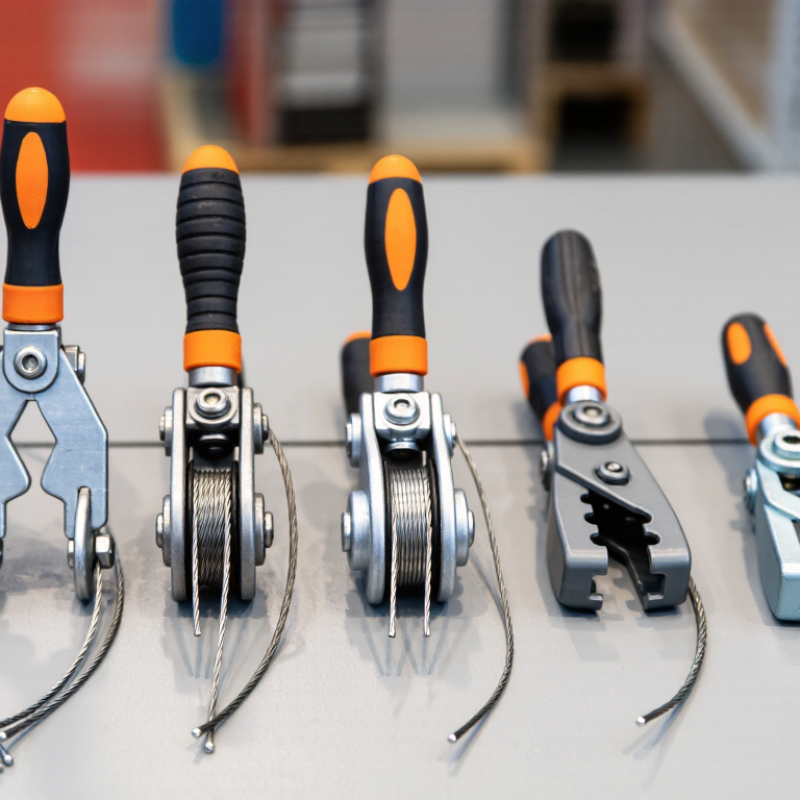
A wire rope grip puller is a mechanical tool that temporarily locks onto wire rope. Its serrated jaws close around the rope under pulling tension. A lever, ratchet, or screw mechanism then transfers force to the cable. When tension is released, the jaws can be opened and repositioned.
These pullers support cable installation, overhead-line work, winching, and controlled alignment. Their value is simple: they provide a firm handhold without permanent rope modification. The correct model depends on rope diameter, construction, surface condition, and rated pulling capacity. A damaged or oily rope may reduce jaw engagement. That detail is often underestimated.
The International Labour Organization reported nearly three million work-related deaths annually in its 2023 safety report. A puller cannot remove every hazard, but correct selection reduces avoidable handling risks. Users should inspect jaws, pins, springs, and rope contact areas before each operation. Never exceed the working load limit. Never use a pulling grip as a lifting attachment unless the manufacturer specifically permits it.
Tips: Match the tool’s range to the actual rope diameter, not a guessed size. Keep the rope aligned with the pulling direction. Apply tension gradually. Stop if the jaws slip, the rope flattens, or the frame bends. Record inspections for repeat projects. In practice, even trained crews miss small defects. A second-person check is worthwhile.
7 Best Wire Rope Grip Pullers for Global Buyers
Wire Rope Grip Pullers: Definition, Uses, and Working Principles
Manual wire rope grip pullers are commonly specified by their nominal pulling capacity. Compact classes around 0.8–1.6 tonnes suit light positioning and tensioning, while 3.2–8.0 tonne classes are typically selected for heavier installation, maintenance, forestry, utility, and recovery work. Actual capacity depends on rope condition, anchoring, reeving, operating angle, and the manufacturer’s safety instructions.
Key Features to Compare When Choosing a Wire Rope Grip Puller
Choosing a wire rope grip puller starts with capacity, not appearance. Compare the rated pulling load with the rope diameter and actual working conditions. A tool rated for 2,000 kilograms may perform poorly on a damaged or oily rope. OSHA guidance identifies six randomly distributed broken wires in one rope lay as a removal warning. That makes inspection a buying feature, not an afterthought.
Jaw design deserves close attention. Hardened, replaceable jaws should hold the rope without crushing its strands. Check the manufacturer’s listed diameter range, jaw profile, locking method, and release mechanism. ISO 4309 recommends checking broken wires, diameter loss, corrosion, and deformation during rope inspections. A puller with a narrow range may grip firmly, but it can become useless after one rope-size change. Small detail. Big consequence.
Portability also affects field safety. A lighter frame helps on towers, vessels, and maintenance platforms, but excessive weight can indicate stronger construction. Ask for proof-load records, material specifications, and independent test information. Industry safety reports repeatedly link lifting incidents with poor inspection and incorrect equipment selection. I would not choose by price alone. A clear load label, ergonomic handle, secure latch, and visible wear indicators often matter more than polished finishing. Check the manual carefully; some ratings assume straight-line pulling, while real work rarely stays perfectly straight.
Seven Top Wire Rope Grip Pullers for Different Global Buyer Needs
Seven Top Wire Rope Grip Pullers for Different Global Buyer Needs
Global buyers rarely need the same wire rope grip puller. A compact manual puller suits maintenance teams working in narrow spaces. A ratchet puller offers controlled movement for fencing, cable alignment, and light recovery tasks. Heavy-duty lever models serve construction crews handling higher loads. For repeated workshop use, a gear-driven puller can reduce hand strain and improve positioning accuracy. Compact alloy models are useful for mobile technicians. Stainless steel versions fit damp or coastal environments. A multi-purpose grip puller gives contractors flexibility across several job sites.
Tips: Check the rated working load, rope diameter range, jaw design, and handle clearance. The working load should remain comfortably below the maximum capacity. Inspect teeth, pins, hooks, and rope contact points before every use. Keep the rope aligned with the pulling direction. Side loading can cause slipping or uneven wear. Wear suitable hand and eye protection.
In my experience, buyers often focus on pulling capacity first. That can be a mistake. A powerful tool may be awkward for frequent overhead work. A smaller model may perform better when access is limited. Look for clear inspection guidance, replaceable wear parts, corrosion-resistant finishes, and traceable product testing. Some specifications appear impressive but lack practical context. Ask how capacity was measured and under which conditions. Test the grip on a short, controlled pull before full operation. No puller is ideal for every task.
7 Best Wire Rope Grip Pullers for Global Buyers - Seven Top Wire Rope Grip Pullers for Different Global Buyer Needs
| No. |
Puller Type |
Rated Pulling Capacity |
Typical Rope Diameter |
Typical Rope Length |
Approximate Unit Weight |
Best Application |
Global Buyer Consideration |
| 1 |
Compact hand-operated grip puller |
0.8 metric ton |
8.3 mm |
20 m |
6–8 kg |
Light maintenance, fencing, landscaping, and small equipment positioning |
Suitable for buyers needing a portable tool with low transport and storage costs |
| 2 |
General-purpose lever grip puller |
1.6 metric tons |
11.5 mm |
20 m |
12–16 kg |
Workshop repair, utility work, agricultural machinery, and vehicle recovery |
A balanced choice where capacity, portability, and replacement-rope availability are equally important |
| 3 |
Heavy-duty lever grip puller |
3.2 metric tons |
16.3 mm |
20 m |
25–32 kg |
Industrial maintenance, structural alignment, forestry, and heavy machinery handling |
Best for professional users who require higher pulling force and a stronger frame assembly |
| 4 |
Long-rope positioning puller |
0.8–1.6 metric tons |
8.3–11.5 mm |
30–50 m |
8–18 kg |
Pipeline alignment, cable installation, remote anchoring, and long-distance positioning |
Useful when the worksite is spread out and frequent anchor-point relocation is undesirable |
| 5 |
Compact rescue and recovery puller |
0.8 metric ton |
8.3 mm |
10–20 m |
6–9 kg |
Emergency recovery, off-road vehicles, temporary lifting, and field service |
Prioritize a carrying case, corrosion-resistant finish, short setup time, and clear operating instructions |
| 6 |
Corrosion-resistant marine puller |
1.6 metric tons |
11.5 mm |
20 m |
13–18 kg |
Marine maintenance, port equipment, coastal construction, and outdoor infrastructure |
Look for galvanized or coated components, sealed mechanisms, and spare parts suitable for humid climates |
| 7 |
High-capacity industrial grip puller |
3.2 metric tons |
16.3 mm |
20–30 m |
28–38 kg |
Heavy structural alignment, bridge work, mining support, and large equipment installation |
Confirm anchor strength, transport arrangements, inspection procedures, and local lifting-equipment requirements |
Specification values are representative configurations commonly used for wire rope grip pullers. Rated pulling capacity is a working-load value, not a breaking-load value. Actual performance depends on rope condition, anchoring, line angle, maintenance, and the manufacturer's operating instructions.
Safety Standards, Load Capacity, and Material Quality Considerations
7 Best Wire Rope Grip Pullers for Global Buyers
Choosing among the seven best wire rope grip pullers requires more than comparing prices. The working load limit must match the actual pulling force, rope diameter, and lifting angle. Never confuse breaking strength with safe working capacity. A puller rated at 2,000 kilograms may perform differently when the rope is worn, bent, or contaminated. The U.S. Bureau of Labor Statistics reported 1,069 fatal work injuries in transportation and material-moving occupations in 2023. That figure is not specific to pullers, but it shows why capacity decisions deserve care.
Check recognized requirements before purchasing. ASME B30.26 addresses rigging hardware, while ISO 4309 covers wire-rope inspection and discard practices. European buyers should also review EN 13414 requirements for wire-rope slings and related components. Look for traceable test certificates, permanent markings, proof-load results, and clear instructions. A grip should hold firmly without crushing the rope. Jaw alignment matters.
Material quality becomes visible at the worksite. Forged alloy steel usually offers better resistance than poorly finished cast material. Galvanized or corrosion-resistant surfaces help in wet environments, but coating damage still needs inspection. Remove a tool with cracked jaws, distorted pins, heavy rust, or slipping under load. I have seen buyers trust a clean factory finish too quickly. That is a mistake worth admitting. HSE recorded 138 worker fatalities in Great Britain during 2023/24, reinforcing the value of disciplined inspection. Fit matters. Test carefully.
How to Select, Operate, and Maintain a Wire Rope Grip Puller
Choosing among the 7 best wire rope grip pullers starts with the working load, rope diameter, and job environment. A reliable puller should match the rope without crushing its strands. Check the rated capacity, jaw design, handle clearance, and safety latch. For muddy sites, choose corrosion-resistant parts. For overhead or repetitive work, weight matters. Regional standards may differ, so verify the manual and certification documents before purchase. Small details matter.
Before operation, inspect the rope, jaws, pins, and frame under good lighting. Remove dirt from the gripping surfaces. Anchor the puller to a rated point, then align it directly with the load. Side loading can bend components or release the rope. Apply tension gradually. Keep hands away from the jaws and never stand in the rope’s line of pull. Wear gloves and eye protection. Do not add a pipe to extend the handle. That shortcut feels efficient, but it can overload the mechanism.
After use, release tension before removing the puller. Wipe off moisture, grit, and oil residue. Lubricate moving joints according to the manufacturer’s instructions. Do not lubricate gripping jaws unless specifically permitted. Inspect for cracked welds, bent hooks, flattened rope strands, or worn teeth. Mark questionable equipment and remove it from service. Even experienced crews can miss early wear. A simple inspection record often reveals repeated problems, such as overloading or poor storage. Keep the puller dry, covered, and ready for the next controlled lift.