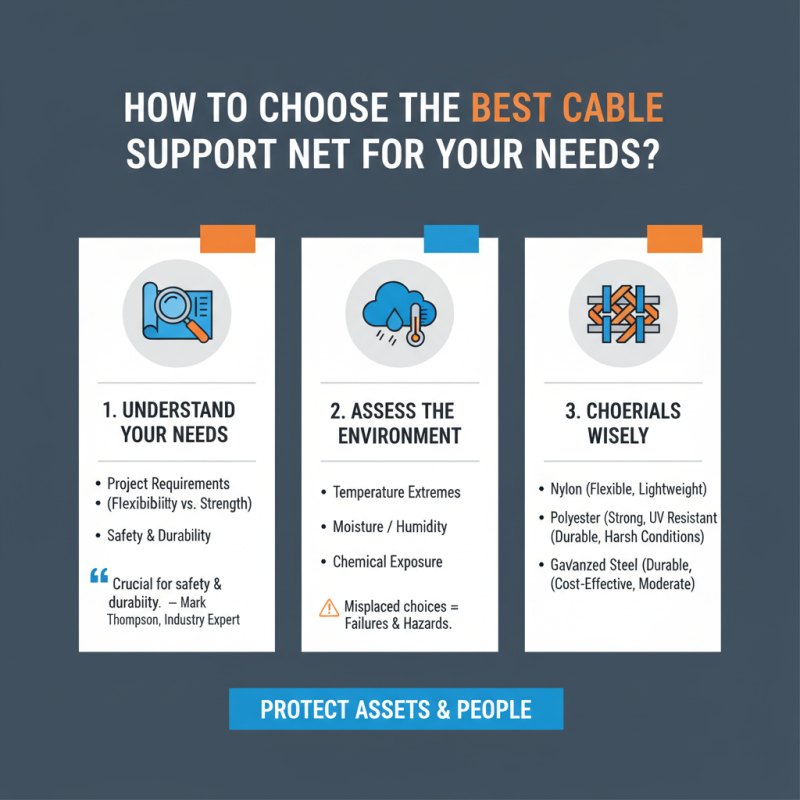
Choosing the right Cable Support Net can be a daunting task. It involves understanding your specific needs, project requirements, and the materials available. According to industry expert Mark Thompson, “Selecting the best Cable Support Net is crucial for safety and durability.” His insight underlines the importance of making informed decisions.
Each type of Cable Support Net serves different applications. Some offer flexibility while others focus on strength. It's essential to assess where and how you plan to use the net. Misplaced choices can lead to failures in structural integrity. This not only increases costs but can also pose safety hazards for workers.
Take into consideration the environment as well. Different materials withstand various conditions. Not all nets perform equally in extreme temperatures or wet conditions. Reflect on what features are non-negotiable for your situation. Remember, a well-chosen Cable Support Net protects both your assets and the people using it.
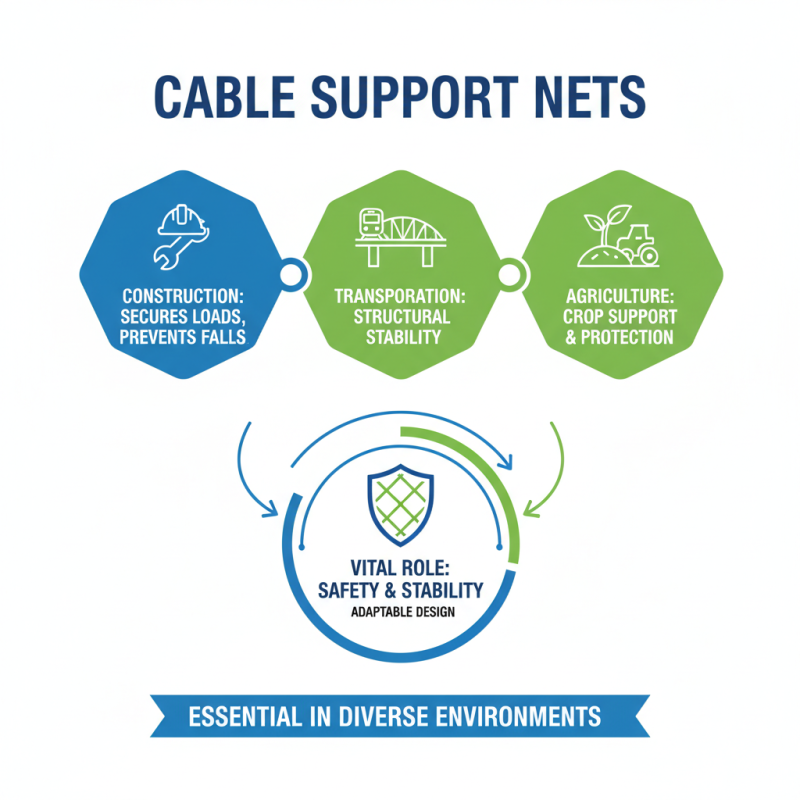
Cable support nets serve a vital role in various sectors, such as construction, transportation, and even agriculture. They provide structural support, ensuring safety and stability in different environments. For example, in construction, these nets can help secure heavy loads and prevent items from falling. Their design varies, catering to specific requirements based on the application.
In agriculture, cable support nets protect crops from harsh weather conditions. They can shield plants from strong winds or heavy rain. Yet, choosing the right net can be complex. You might find yourself uncertain about the materials or load capacities needed. There are many factors to consider, such as mesh size and tensile strength. Sometimes, it's easy to overlook the specifications that truly matter.
The decision-making process often involves trial and error. You may need to experiment with different types to find what works best. It's common for users to make mistakes, leading to inefficiencies. Reflecting on past choices can be enlightening. This helps in understanding what features are essential for your specific use, whether in construction or gardening.
Choosing the right cable support net requires a clear understanding of your specific needs. Begin by assessing the environment where the net will be used. Different settings, such as construction sites, warehouses, or outdoor areas, may demand various materials and designs. According to a recent report by the International Association of Engineering, over 45% of cable support failures are attributed to inadequate customization to the specific environment.
Next, consider the load capacity. How much weight will the net need to support? Investigating the strength of the materials is essential. For example, high-density polyethylene (HDPE) can withstand significant loads, but does the net also provide adequate UV resistance? In a study by the Global Insulation Association, it was noted that about 30% of nets degrade quickly under prolonged sun exposure. You must balance strength and durability based on usage.
Think about installation requirements as well. Some nets may require professional installation, while others offer ease of setup. As reported in a recent survey, 39% of users faced challenges with installation, which led to improper usage. A simple net can save costs, but it might not deliver the necessary support. Balancing convenience and functionality is key in your decision-making process.
When choosing a cable support net, the materials used are paramount. Common materials include nylon, polyester, and metal. Nylon nets are lightweight and flexible. They can withstand various weather conditions but may degrade over time under constant UV exposure. Polyester offers better UV resistance. It’s also thicker, making it more durable. However, it might not be as stretchy as nylon.
Metal nets, like those made from galvanized steel, are incredibly strong. They resist rust and are ideal for heavy loads. But they can be heavy to install. Each material has its pros and cons. Your specific needs will dictate the best choice.
Consider where the net will be used. Indoor setups may favor lighter materials. Outdoor usage requires a net that withstands elements. Think about long-term maintenance as well. A high-durability option may cost more but could save money in the long run. Evaluate your priorities carefully.
Choosing the right cable support net involves understanding installation methods and maintenance needs. Various methods exist, each with specific requirements. For instance, a study noted that 75% of installations favor the use of tensioned systems for their durability. These systems typically demand a standard mounting height of around 10 feet, but this can vary based on your project.
Maintenance can greatly influence your decision. Regular checks are vital. Ignoring upkeep can lead to safety issues. Reports indicate that neglected nets can lose up to 30% of their load-bearing capacity over time. Ensuring that your installation is accessible makes maintenance easier. Some nets require annual inspections, while others may need semi-annual evaluations.
Consider environmental factors as well. Exposure to UV light can degrade materials. In coastal areas, saltwater corrosion accelerates wear. A proactive maintenance plan is essential to address these challenges. This often requires more than just visual inspections. In-depth assessments can pinpoint potential points of failure before they become serious issues.
| Net Type | Installation Method | Maintenance Needs | Durability | Cost |
|---|---|---|---|---|
| Standard Cable Net | Easy installation with pre-made kits | Low, occasional checks required | 5-7 years | $200 - $300 |
| Heavy-Duty Cable Net | Professional installation recommended | Medium, biannual inspections needed | 10+ years | $400 - $600 |
| Lightweight Cable Net | DIY installation, very user-friendly | Very low, minimal maintenance | 3-5 years | $100 - $200 |
| Custom Cable Net | Requires skilled installation | Medium, regular maintenance required | 5-10 years | $500 - $900 |
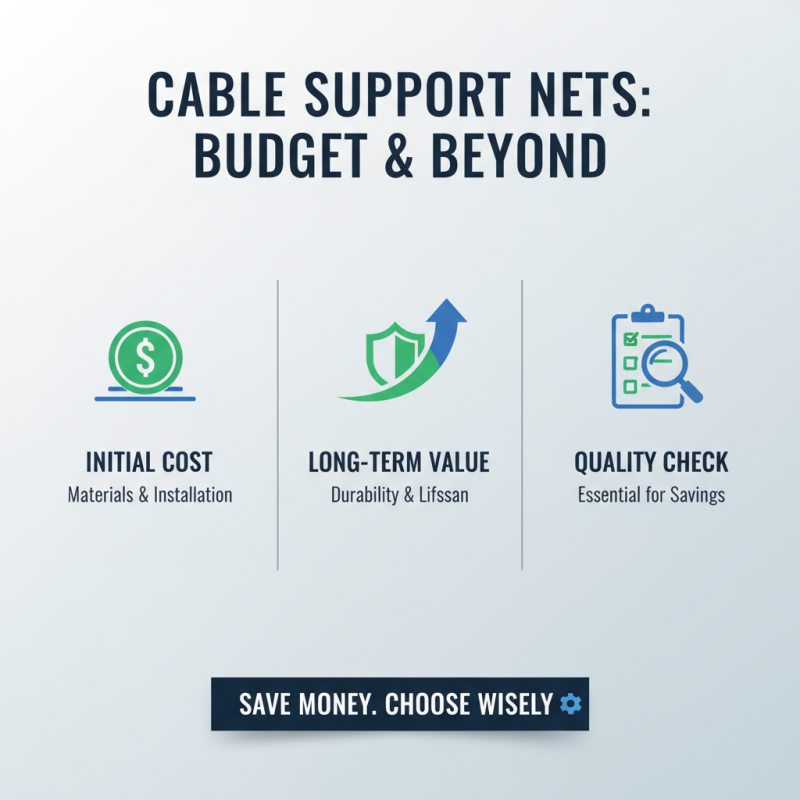
When considering a cable support net, budget is key. The right choice can save you money in the long run. Think about the cost of materials and installation. Some nets are cheaper but may not last. Check the quality before making a decision.
Tips: Look for user reviews. These can provide insights into durability. A net that costs less upfront might need frequent replacements. That can add up.
Evaluate your space needs too. A larger net might be pricier, yet it could serve multiple purposes. If you only need a small section, don’t overspend.
Consider hidden costs, like maintenance. Some nets require special care. Factor this into your budget. Balancing quality and cost will help you make a wise purchase. Be mindful of your long-term needs.