Leave Your Message
Choosing the right Bow Shackle in 2026 requires more than matching a pin diameter to a catalog photograph. The correct choice depends on working load limit, load direction, material, traceability, and site conditions. A bow-shaped body usually accommodates wider sling angles than a traditional D shackle. That extra space matters when two synthetic slings meet under tension. It does not make every configuration safe.
Rigging engineer David Duerr offers a useful warning: “A shackle is only as strong as the weakest part of the connection.” His point is simple. Check the body, pin, sling, master link, and attachment point together. A 6.5-ton Bow Shackle cannot safely support a connection rated for only three tons. Angled loading can reduce capacity sharply, while side loading may create uneven stress across the pin. Always follow the manufacturer’s working load limit table.
This guide examines how to choose a Bow Shackle for lifting, marine, construction, and industrial applications. It considers alloy steel, galvanized finishes, screw-pin designs, safety-bolt pins, inspection markings, and certification records. Look for permanent identification, readable capacity markings, and evidence of compatible standards. Inspect for cracks, bent pins, severe corrosion, thread damage, and enlarged holes. Small defects can hide serious weakness.
Real work is rarely perfect. Labels fade. Slings become wet. Operators sometimes rush. That is why selection should include a realistic inspection routine, not only a purchasing decision. When uncertain, stop the lift and consult a qualified lifting professional or the manufacturer. Better questions may feel slower, but they prevent expensive assumptions.
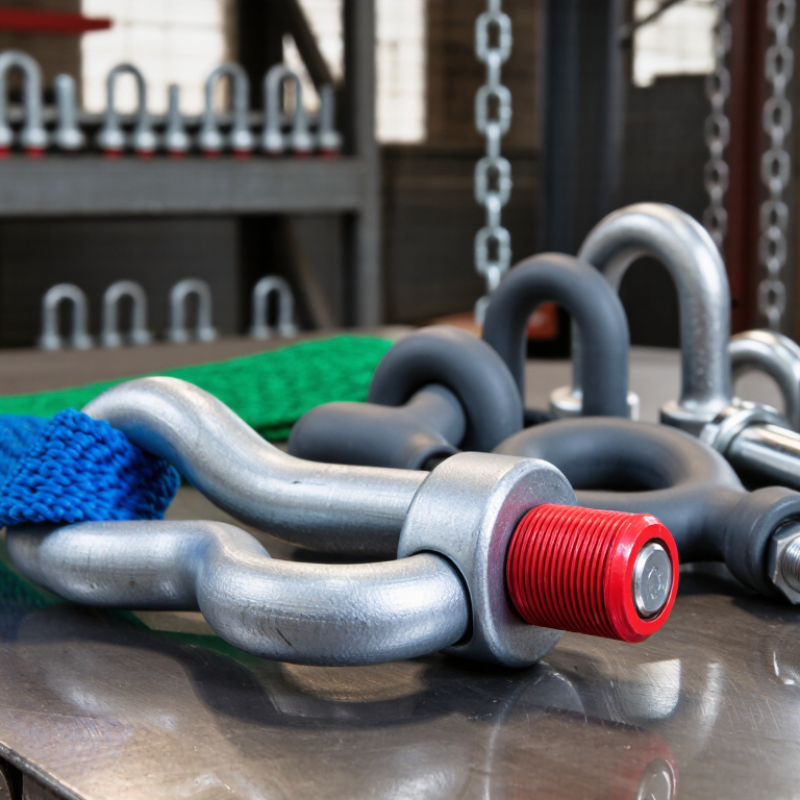
A bow shackle is a U-shaped lifting connector with a rounded body and removable pin. The broad bow gives slings, ropes, and webbing more room to move. Its curved profile also helps distribute force around the connection point. The pin closes the opening and carries the load through the shackle body. Simple, but not foolproof.
When choosing one in 2026, check the working load limit before considering size or appearance. Select a shackle rated above the expected load, including shock forces and uneven tension. A screw pin suits frequent assembly, while a bolt-type pin offers stronger security for fixed installations. Never assume a thicker body is automatically safer. The design, material, heat treatment, and testing records matter more.
Keep the load centered in the bow. Side loading can sharply reduce capacity and twist the connector. The sling should move freely without pressing against the pin. Inspect threads, pin deformation, cracks, corrosion, and illegible markings before each use. Remove damaged hardware from service immediately. In practical inspections, dirt around the pin is easy to overlook. That small detail can hide serious wear. I still think visual checks are sometimes trusted too much; measured wear limits and traceable certificates provide better confidence. A bow shackle should work smoothly, remain identifiable, and match the lifting plan rather than merely fit the hole.
| Selection Dimension | Verified Reference Data | How a Bow Shackle Works | Recommended Selection Rule | |||||||||||||||
|---|---|---|---|---|---|---|---|---|---|---|---|---|---|---|---|---|---|---|
| Basic definition | A bow shackle is a U-shaped or anchor-shaped load-connecting fitting with a removable pin. | The bow-shaped body carries the load while the pin closes the opening and transfers force through the shackle body. | Use a bow shackle when several sling eyes, hooks, or connectors must be gathered at one connection point. | |||||||||||||||
| Common standards | Common reference standards include ASME B30.26 for rigging hardware and EN 13889 for forged steel shackles. | Standards define requirements for design, marking, testing, inspection, and rated capacity. | Select a shackle manufactured and marked to the standard required by the worksite or local regulations. | |||||||||||||||
| Working Load Limit (WLL) | WLL is the maximum permitted working load under the stated loading conditions. It must be permanently marked on the shackle. | The body and pin are engineered to carry the rated load without exceeding the permitted working stress. | Choose a WLL at least equal to the highest calculated load, including sling-angle effects and any impact or uneven loading. | |||||||||||||||
| Design factor | Many compliant forged lifting shackles use a minimum design factor of 6:1, meaning minimum breaking force is at least six times the WLL. | The design factor provides a margin between rated working capacity and ultimate failure; it is not extra usable capacity. | Never use the breaking force as the working capacity or lift above the marked WLL. | |||||||||||||||
| Proof testing | A common proof-test requirement for lifting shackles is 2 times the WLL, subject to the applicable standard and product specification. | Proof testing checks the assembled shackle for manufacturing defects and permanent deformation before service. | Request a certificate of conformity or proof-test documentation when traceability is required. | |||||||||||||||
| Shackle body shape | The wider bow provides more internal room than a narrow D-shaped shackle of similar nominal size. | The curved crown allows multiple sling eyes or connectors to align and move within the bow. | Choose a bow shackle for multi-leg slings, anchor connections, towing points, and applications requiring more connection space. | |||||||||||||||
| Pin configuration | Screw-pin shackles are suited to frequent assembly; bolt-type shackles use a bolt, nut, and retaining cotter pin for more secure long-duration connections. | The pin closes the load path and must be fully seated, correctly sized, and compatible with the body. | Use a screw pin for temporary or frequently changed rigging. Use a bolt-type pin where vibration, tampering, or long-term installation is a concern. | |||||||||||||||
| Two-leg sling angle | For equal legs, ideal leg tension is calculated as T = W ÷ (2 × cos θ), where θ is measured from the vertical. | As the sling angle becomes more horizontal, the tension in each leg increases even though the lifted weight stays the same. | Size each shackle for the calculated leg tension, not merely for half of the lifted weight. | |||||||||||||||
|
||||||||||||||||||
| Loading direction | The marked WLL normally applies to in-line loading through the bow and pin unless the manufacturer provides a separate rating. | Side loading can bend the body or impose uneven forces on the pin and threaded section. | Keep the load centered. Do not side-load, tip-load, or force the pin against an edge unless an approved load-reduction chart specifically permits it. | |||||||||||||||
| Material and finish | Forged carbon or alloy steel is commonly used. Galvanized or painted finishes provide corrosion protection but do not increase the WLL. | The forged body and pin resist tensile, shear, and bearing loads within the rated service conditions. | Match the material and coating to corrosion, temperature, chemical exposure, and required lifting conditions. | |||||||||||||||
| Markings and traceability | A lifting shackle should be identifiable by items such as WLL, size, material or grade, standard, and traceability information where required. | Markings allow users to match the hardware to its capacity and inspection records. | Reject shackles with missing, illegible, or altered identification. | |||||||||||||||
| Inspection criteria | Inspect before each use for cracks, bending, gouging, excessive wear, corrosion, damaged threads, deformation, and an incomplete cotter pin. | Damage or deformation can reduce the cross-section, prevent proper pin seating, or change the way forces are distributed. | Remove damaged hardware from service and have it evaluated by a qualified person; do not repair by welding, heating, or bending. | |||||||||||||||
Note: Capacity values and angle calculations are general rigging references. Always follow the shackle manufacturer's marked WLL, application limitations, inspection requirements, and the governing local standard.