Leave Your Message
China’s busway, factory automation, and commercial construction sectors continue to increase demand for dependable cable-support hardware. Fortune Business Insights estimates that the global wire and cable market was worth about USD 228 billion in 2023. That expansion creates opportunities for Chinese manufacturers, but it also raises quality expectations.
A Bus Drop Cable Support Grip must do more than hold a hanging cable. It should distribute mechanical load across a braided mesh, maintain stable tension, and protect the cable jacket from sharp pressure points. In a real installation, the grip may hang above a production line, beside moving machinery, or inside a warm and dusty workshop. Small details matter. Mesh wire, eye shape, cable diameter range, and rated support capacity all deserve verification.
IEC 61914 provides an important reference for cable cleats and related mechanical support performance. The National Electrical Contractors Association also emphasizes proper cable support, installation practice, and identification in its industry guidance. These references help buyers evaluate China suppliers beyond price, especially when reviewing test records, material certificates, and production consistency. A catalogue photo is not proof. Ask for dimensional drawings, load data, corrosion information, and sample inspection results.
Experienced suppliers should explain how their Bus Drop Cable Support Grip is selected for cable weight, installation direction, and environmental exposure. They should also provide traceable quality controls from wire forming to final packing. The comparison is not perfect, because supplier documents may use different test methods. Still, careful questions reveal more than polished marketing. This guide examines leading China suppliers through product capability, technical evidence, customization experience, and long-term reliability. Small components can prevent expensive failures.
China Top Bus Drop Cable Support Grip Suppliers
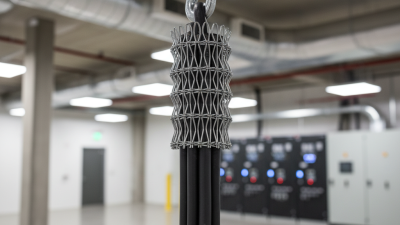
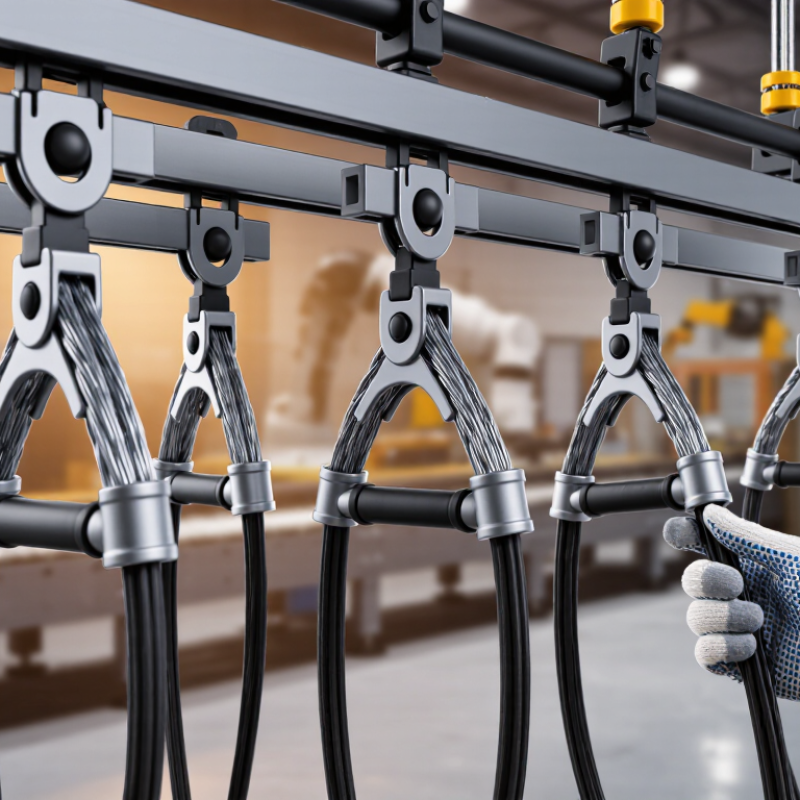
A bus drop cable support grip is a woven wire mesh device that carries a hanging cable’s weight. It prevents the cable from pulling directly on terminals, plugs, or equipment housings. The grip normally includes a loop, eye, or saddle for attachment. Its mesh tightens around the cable when tension increases.
In practical installations, the grip should sit above the connection point, not beside it. The cable should form a smooth drop, without sharp bends or visible compression. NFPA 70, 2023, requires flexible wiring methods to be supported and protected from strain. This principle matters because repeated movement can loosen terminations before damage becomes obvious. A 2023 Electrical Safety Foundation report recorded over 28,000 workplace electrical injuries in the United States during the previous decade. The figure covers many equipment types, but it shows why mechanical support deserves attention.
Selection depends on cable diameter, weight, operating temperature, and movement. IEC 61914:2021 emphasizes verified mechanical performance for cable support devices, including resistance to forces during service. Suppliers should provide rated working load, material details, test conditions, and installation instructions. Stainless steel mesh suits humid or corrosive areas, while galvanized options may fit controlled indoor environments. A common mistake is choosing by diameter alone. That is not enough. Field vibration, cleaning routines, and the cable’s bend radius can change performance. The grip is small, but its safety role is not.
| Data Dimension | Technical Information | Typical Selection or Requirement | Why It Matters |
|---|---|---|---|
| Product Definition | A bus drop cable support grip is a woven mechanical cable-support device used to suspend, secure, or relieve strain on flexible bus drop cable. | Installed around the cable and connected to a suitable support point, hanger, bracket, or structural member. | It transfers the cable’s mechanical load to the support system instead of allowing the cable terminals or electrical connections to carry the weight. |
| Primary Application | Vertical or horizontal support of flexible power cable drops between busway systems, distribution equipment, machinery, and other electrical connections. | Commonly selected for industrial facilities, workshops, commercial buildings, manufacturing lines, and temporary or reconfigurable power arrangements. | The grip helps maintain an orderly cable route and reduces movement, sagging, and accidental pulling. |
| Cable Types | Suitable cable types may include flexible bus drop cable, portable power cable, and other round-jacketed cables when the grip size and construction are compatible. | Confirm the cable construction, outside diameter, jacket material, flexibility, and allowable pulling or supporting method before installation. | A grip designed for the wrong cable diameter or jacket surface may slip, cut into the jacket, or provide inadequate support. |
| Grip Construction | Usually formed from interwoven metallic strands in a lace-up, split-mesh, closed-mesh, or basket-style configuration. | Choose a construction that permits installation over the cable and provides a stable load-bearing connection. | The mesh distributes pressure over a larger section of the cable jacket than a narrow clamp or sharp-edged fastener. |
| Common Materials | Typical materials include galvanized steel, stainless steel, and corrosion-resistant coated steel. | Use galvanized steel for many general indoor applications; consider stainless steel for corrosive, wet, outdoor, food-processing, or washdown environments. | Material selection affects corrosion resistance, service life, strength, and compatibility with the installation environment. |
| Cable Outside-Diameter Range | Product ranges vary widely; common grip families may cover approximately 6–76 mm (0.24–3.00 in) cable outside diameter. | The actual grip must be selected by measured cable outside diameter, not by conductor size alone. | Conductor size does not uniquely identify the finished cable diameter because insulation, jacket, shielding, and construction vary. |
| Support Length | Typical body lengths are approximately 150–900 mm (6–36 in), depending on cable diameter and required holding capacity. | Use a longer support area when the cable is heavy or when a lower contact pressure is preferred. | A longer mesh contact area can distribute the load more evenly and reduce localized stress on the cable jacket. |
| Connection Options | Common termination arrangements include eye fittings, loop ends, threaded-eye connections, split support eyes, and fittings for messenger or structural supports. | Select a connection compatible with the hanger, anchor point, rod, hook, or support bracket used on site. | The connection must provide a secure load path and should not introduce sharp bends or excessive side loading. |
| Load Rating | Rated working loads are product-specific and may range from tens to several hundred kilograms-force, depending on size, material, and termination design. | Use the manufacturer’s published working load limit and maintain an appropriate safety margin; never use breaking strength as the allowable working load. | The support grip must safely carry the cable weight and foreseeable installation forces without slipping or deforming. |
| Vertical Installation | For vertical runs, the grip should be positioned to support the cable weight and prevent the load from being transferred to terminals or connectors. | Provide additional supports when the cable length, weight, vibration, or installation conditions exceed the grip’s rated capacity. | Long vertical cable runs can generate substantial tensile force, especially during movement or fault-related mechanical stress. |
| Horizontal Installation | For horizontal runs, the grip is commonly used to limit sagging and movement at transition points or near equipment. | Space supports according to cable weight, cable manufacturer requirements, local electrical rules, and the support grip rating. | Proper spacing helps maintain bend-radius control and reduces mechanical strain at entry points. |
| Cable Bend Radius | The cable must be routed without exceeding its minimum permitted bend radius. | Follow the cable manufacturer’s bend-radius specification; a common value for flexible power cable is expressed as a multiple of cable outside diameter, often 4× to 8× depending on construction. | Excessive bending can damage insulation, shielding, conductors, or the cable jacket even when the support grip is correctly installed. |
| Electrical Function | The grip is a mechanical support accessory and is not intended to carry current or replace an electrical grounding or bonding conductor. | Provide grounding, bonding, and electrical termination separately in accordance with the applicable installation requirements. | Separating mechanical support from electrical continuity helps prevent unsafe reliance on the woven grip for grounding. |
| Environmental Conditions | Important conditions include moisture, salt spray, chemicals, ultraviolet exposure, temperature, vibration, oil, and washdown. | Match the grip material and finish to the environment; stainless steel is generally preferred where corrosion exposure is severe. | Environmental degradation can reduce strand strength and cause premature failure. |
| Installation Practice | The mesh should be evenly distributed around the cable, fully engaged with the jacket, and secured at the designated support point. | Remove sharp edges, avoid twisting the mesh, prevent contact with abrasive surfaces, and verify that the cable is not being pinched. | Correct installation promotes even load distribution and reduces jacket damage or grip slippage. |
| Selection Checklist | Key inputs are cable outside diameter, cable weight per unit length, supported span, orientation, environmental exposure, connection method, and required working load. | Confirm all dimensions and ratings from current technical documentation before ordering or installation. | These factors determine whether the selected grip will fit correctly and perform safely throughout its service life. |
| Applicable Requirements | Installation should comply with the applicable electrical code, cable manufacturer instructions, site safety rules, and structural-support requirements. | In the United States, relevant requirements may include provisions for busways, cable support, flexible cables, grounding, and raceway or wiring methods; local regulations may differ. | Code compliance and professional installation are necessary because support-grip requirements depend on the complete electrical system and location. |