2026 Best Orchid Turnbuckle Bolt for Global Buyers?
Choosing the best Orchid Turnbuckle Bolt in 2026 requires more than comparing prices or polished product photographs. Global buyers need dependable threads, accurate dimensions, suitable strength, and traceable material records. The bolt may look small. Its responsibility is not.
Bill Eccles, a recognized bolting engineer, offers a useful principle: “A fastener is only as reliable as its installation.” This idea matters when selecting an Orchid Turnbuckle Bolt for marine rigging, architectural tension systems, agricultural structures, or industrial supports. A correct diameter can still fail through poor engagement, damaged threads, uneven tension, or unsuitable corrosion protection.
This guide examines practical buying criteria for international purchasers. It considers stainless steel grades, carbon-steel options, surface treatments, thread standards, load expectations, packaging, inspection documents, and supplier communication. A supplier should explain whether the listed load is working load, proof load, or ultimate breaking load. These terms are not interchangeable.
Weather changes everything. Salt spray, rain, dust, and temperature cycling can quietly reduce service life. A bright zinc finish is not automatically marine-ready. Stainless steel is not automatically immune to corrosion, either.
Some decisions remain imperfect. Product pages may omit testing details. Catalog drawings may contain small inconsistencies. Buyers must ask difficult questions before ordering large quantities. That is good practice.
The strongest Orchid Turnbuckle Bolt is not always the cheapest or heaviest option. It is the one matched carefully to the load, environment, connection design, and verified manufacturing quality. This article helps global buyers make that judgment with clearer evidence and fewer assumptions.
What Is an Orchid Turnbuckle Bolt?
What Is an Orchid Turnbuckle Bolt?
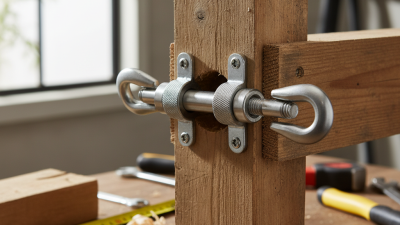
An orchid turnbuckle bolt is a small adjustable tensioning component used in orchid supports, greenhouse wires, hanging systems, and lightweight trellises. “Orchid” describes the application, not a universal technical standard. The assembly usually includes a threaded bolt, eye, hook, or clevis end. Rotating the central body increases or reduces wire tension.
It helps keep support wires straight around orchid pots and climbing stems. This matters in humid greenhouses, where loose wires can sag and touch leaves. Stainless steel offers stronger corrosion resistance than ordinary plated steel. However, the bolt itself does not replace a tested anchor. Threads, end fittings, and the supporting frame must share the load. The USDA Floriculture Crops 2023 Summary reported approximately 6.7 billion dollars in U.S. wholesale floriculture sales. That scale reflects why durable greenhouse hardware deserves careful specification, even for small orchid systems. The term remains inconsistent. Product descriptions can be confusing.
Tips: Check thread size, working load, wire diameter, and material before ordering. Measure twice. Leave adjustment space for seasonal movement. Avoid overtightening, because thin greenhouse frames may bend before the bolt fails. In my experience, a small stainless turnbuckle gives better control than improvised wire knots, but it can still corrode near fertilizer mist. Rinse exposed hardware regularly and inspect threads with a bright light. A practical weakness is often overlooked: growers select the bolt, but forget the anchor point.
Key Materials and Structural Design Features
For global orchid growers, the best turnbuckle bolt begins with the right material. Greenhouses hold moisture, fertilizer mist, and frequent temperature changes. These conditions can attack ordinary steel quickly.
Stainless steel 316 offers strong resistance to chloride-rich water and coastal humidity. Stainless steel 304 usually suits inland greenhouses with controlled irrigation. Galvanized steel can reduce cost, but damaged coatings may expose the core metal. Material certificates and corrosion-test records deserve careful review. A bright finish looks attractive. It does not prove long service life.
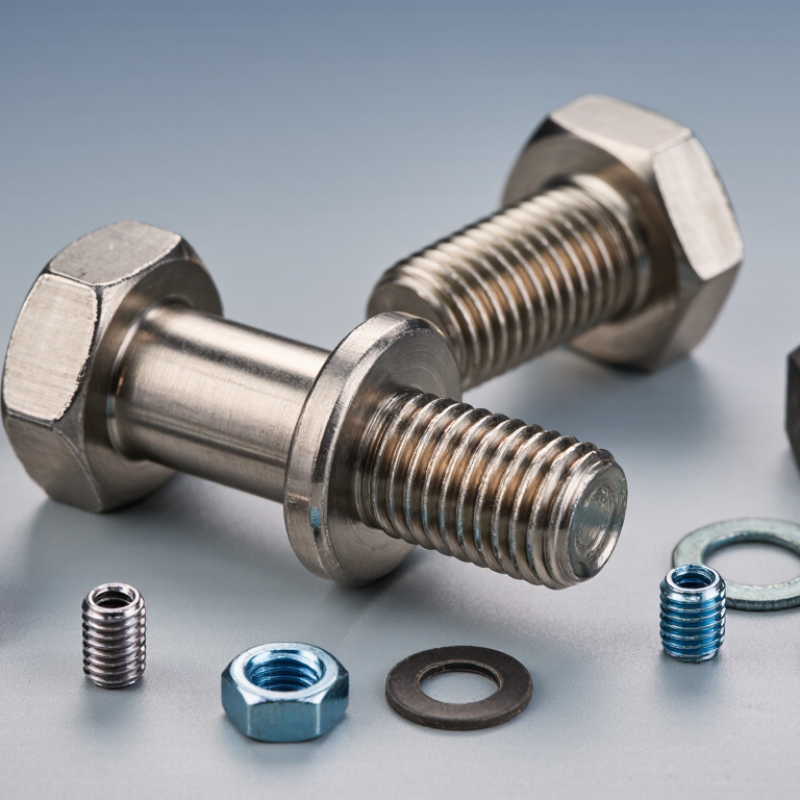
Structural design matters just as much. A reliable turnbuckle bolt should have clean threads, balanced tension, and a body sized for its working load. Eye ends or jaw ends must match the cable, hook, or support frame. Fine threads allow precise adjustment, while coarse threads tolerate dirt better. That trade-off is easy to overlook. The threaded section should engage deeply, with enough adjustment travel for seasonal growth and frame movement.
Use a locknut or safety wire where vibration may loosen the setting. Avoid sharp edges near soft orchid stems and aerial roots. Load ratings should include a sensible safety margin, not just the maximum breaking force. In real installations, poor alignment often causes more trouble than weak metal. Buyers should verify thread standards, dimensions, batch traceability, and inspection records before ordering. Even premium corrosion resistance cannot correct an unsuitable thread or an overloaded support.
How to Choose the Right Size and Load Rating
Choosing the right orchid turnbuckle bolt starts with the structure, not the bolt itself. Measure the cable diameter, mounting holes, and available adjustment space. Metric and imperial threads are not interchangeable. Measure twice. Do not guess.
For greenhouse orchid benches, a 4 mm cable may suit light support, while heavier frames need larger hardware and stronger anchor points. Check the bolt’s working load rating, not only its breaking load. A safe selection should handle the normal tension with a clear safety margin. Add weight from wet plants, hanging pots, irrigation lines, and occasional movement from wind or maintenance. The weakest component controls the whole assembly.
Stainless steel is usually practical in humid growing areas, but different grades resist corrosion differently. Inspect the threads and fittings for pitting, rough movement, or stripped edges before installation. A turnbuckle that feels stiff may already be damaged. Keep it simple. Choose matching thread types, compatible end fittings, and a length that allows useful adjustment without leaving excessive exposed thread. Ask suppliers for material details, dimensional drawings, load data, and test documentation. Those documents are more dependable than attractive product photos. I would also recheck the load after installation, because real greenhouse conditions often differ from the original estimate. A small sizing mistake can become expensive when plants and supports are already established.
Global Standards, Certifications, and Buyer Requirements
For 2026, global buyers should judge an orchid turnbuckle bolt by verified performance, not appearance. ISO 898-1 lists 800 MPa minimum tensile strength for property class 8.8 fasteners. Class 10.9 requires 1,040 MPa. These figures matter when cables face repeated tension, vibration, or outdoor loading. Buyers should request material certificates, batch numbers, dimensional drawings, and independent tensile-test results.
Corrosion protection also requires careful selection. ISO 3506-1:2020 specifies 800 MPa minimum tensile strength for A4-80 stainless fasteners. Stainless steel suits humid and coastal locations, but it is not automatically the strongest option. Galvanized carbon steel may provide better load efficiency at a lower cost. The correct choice depends on salt exposure, working load, temperature, and maintenance access. A certificate alone is not enough.
European projects may request EN 10204 type 3.1 inspection documents, while structural applications can involve additional national rules. CE marking is not automatically required for every turnbuckle component. Buyers should confirm its legal scope before ordering. Suppliers should also provide thread gauges, coating thickness records, and torque guidance. In field inspections, damaged threads and mismatched nuts appear more often than expected. That weakness deserves attention. A perfect checklist can still miss poor installation, unclear loading assumptions, or incomplete traceability.
2026 Best Orchid Turnbuckle Bolt for Global Buyers?
Global standards, certifications, and buyer requirements
ISO 898-1
Carbon and alloy steel fastener property classes. Class 4.6 has a nominal minimum tensile strength of 400 MPa, while Class 8.8 has 800 MPa.
ISO 3506-1
Mechanical properties for corrosion-resistant stainless-steel fasteners. A2-70 is rated at 700 MPa and A4-80 at 800 MPa minimum tensile strength.
Buyer documentation
Global buyers commonly request material grade, dimensional inspection, traceability, a test report, and evidence that the selected standard applies to the complete turnbuckle assembly.
The chart compares nominal minimum tensile-strength values stated for selected ISO fastener property classes and stainless-steel grades. These values are reference points only; turnbuckle working load, thread engagement, corrosion environment, safety factor, and applicable lifting or construction regulations must be verified for the intended application.
Installation, Maintenance, and Supplier Evaluation
2026 Best Orchid Turnbuckle Bolt for Global Buyers?
For orchid turnbuckle bolt installation, confirm thread size, working load, material, and surface finish before ordering. A bolt that looks precise may still fail under uneven tension. Use calibrated torque tools and align both threaded ends without forcing them. Keep the load path straight. Never use decorative hardware for lifting unless its rated application is documented.
Maintenance should include a visual check before installation and after severe weather. Look for bent threads, cracked eyes, coating damage, and rust beneath washers. The NACE IMPACT study estimated global corrosion costs at about 3.4% of worldwide gross domestic product. That figure supports simple protection measures, including drainage, compatible coatings, and dry storage. Still, coating is not a substitute for correct material selection. I have seen clean-looking hardware hide thread galling. It deserves closer inspection.
Supplier evaluation requires more than a low unit price. Request material certificates, batch traceability, dimensional inspection records, and tensile-test results aligned with ISO 898-1 where applicable. Ask how working-load limits were established. The International Labour Organization estimated 2.93 million work-related deaths annually, with many linked to unsafe work systems. Supplier audits should therefore review process control, packaging, and replacement procedures. Check sample measurements independently. Small mismatches can become expensive delays. One weakness remains: international standards may not fully describe every orchid-style fitting, so buyers should obtain engineering confirmation for unusual loads, environments, or custom finishes.